

Keynotes
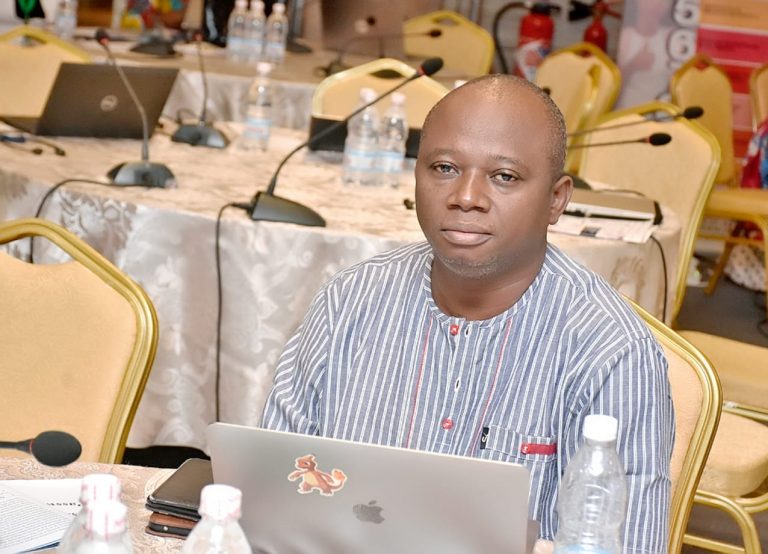
MALO Sadouanouan
(Professor, Member of the National Academy of Sciences, Arts and Letters of Burkina Faso)
Nazi BONI University, Burkina Faso
Title: AI Everywhere, AI Nowhere: What if we went back to basics
Prof. Sadouanouan MALO holds a PhD in Computer Science from the École Nationale Supérieure de Mécanique et d’Aéronautique (ENSMA) in France. In recent years, his research has focused on remote sensing, artificial intelligence, Semantic Web technologies and their applications in fields such as health, agriculture, security, optimal energy management etc. Previously, he worked for several years on the temporal validation of real-time applications. Prof. MALO was Deputy Director of the Higher School of Computer Science (ESI) at Nazi BONI University (Bobo-Dioulasso, Burkina Faso) and is currently the coordinator of the Master’s program in Data Science and head of the Data Intelligibility Research Team (ER-ID) at the Laboratory of Algebra, Discrete Mathematics, and Computer Science (LAMDI). Prof Sadouanouan MALO is a full member of the National Academy of Sciences, Arts, and Letters of Burkina Faso (ANSAL-BF).
Abstract
In the literature, Artificial Intelligence (AI) is defined as the branch of computer science concerned with formalizing and simulating human intelligence as a whole, rather than focusing on specific aspects. It is subdivided into two main branches: symbolic AI and connectionist AI. Connectionist AI (ANN) uses data through innovative statistical tools. In contrast, symbolic AI does not learn from data but relies on the logical formalization of domain knowledge. However, current AI applications, whether symbolic or connectionist, share a common limitation: they reason within the environmental context for which they were designed and do not learn beyond the scope for which they were trained. Despite this observation, in recent years the use of machine learning models has expanded into numerous fields, many of which raise significant ethical questions due to the opacity and poor interpretability of these models. It is therefore crucial to explore techniques that make models more transparent. In this presentation, we outline the limitations of symbolic AI and connectionist AI, then explore new paradigms that leverage symbolic structures to provide innovative solutions to the problem of understanding machine learning models. This approach, based on the complementarity of symbolism and statistics, paves the way for a new generation of intelligent solutions where semantics plays a key role in ensuring true interoperability between disciplines and technologies. At the heart of the approach we are exploring is the paradigm of ontologies that link the data used in machine learning models with the symbolic knowledge of domain experts.
Explainable AI; Ontology; Symbolic AI; Semantic Technologies; Machine Learning.
Title: Towards Next-Generation Communication Networks for Developing Countries: Hybrid Classical–Quantum Optimization
Dr. Trung Q. Duong (IEEE Fellow, IET Fellow, CAE Fellow, EIC Fellow, and AAIA Fellow) is a Canada Excellence Research Chair and Full Professor at Memorial University of Newfoundland, Canada. He is also an adjunct professor at Queen’s University Belfast, UK and a visiting professor under eminent scholar program at Kyung Hee University, South Korea. His current research interests include quantum optimisation and machine learning in wireless communications. He is an author/co-author of 670+ publications with 26,000+ citations and h-index 86. He has served as an Editor for many reputable IEEE journals (IEEE Trans on Wireless Communications, IEEE Trans on Communications, IEEE Trans on Vehicular Technology, IEEE Communications Surveys & Tutorials, IEEE Communications Letters, and IEEE Wireless Communications Letters) and has been awarded best paper awards in many flagship conferences including IEEE ICC 2014, IEEE GLOBECOM 2016, 2019, and 2022. He was the only UK-based researcher awarded both the Research Fellowship and Research Chair from the Royal Academy of Engineering. In 2017, he was awarded the Newton Prize from the UK government. He is currently the Editor-in-Chief of IEEE Communications Surveys & Tutorials and an IEEE ComSoc Distinguished Lecturer. He is a fellow of the Institute of Electrical and Electronics Engineers (IEEE), the Institution of Engineering and Technology (IET), the Canadian Academy of Engineering (CAE), the Engineering Institute of Canada (EIC), and the Asia-Pacific Artificial Intelligence Association (AAIA). He is the Founding Director of Quantum Communications and Computing Center (QC3).
Abstract
Quantum computing uses the concept of quantum mechanics to offer a massive leap forward in relations to solving complex computation problems. Hybrid quantum-classical machine learning algorithms can significantly enhance the processing efficiency and exponentially computational speed-up, highly capable of guaranteeing high QoS requirements of 6G networks. This talk presents the state-of-the-art in quantum machine learning and optimization and provide a comprehensive overview of its potential, via machine learning approaches. Furthermore, this talk introduces quantum-inspired machine learning/optimization applications for 6G networks in terms of 6G channel estimation and RF fingerprinting considering their enabling technologies and potential challenges. Finally, some dominating research issues and future research directions for the quantum-inspired machine learning/optimization in 6G networks are elaborated.
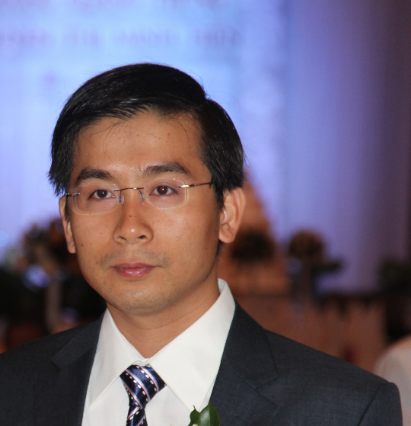
Trung Q. Duong
(IEEE Fellow, IET Fellow, EIC Fellow, CAE Fellow, AAIA Fellow)
Memorial University of Newfoundland, Canada
